
 Open filter


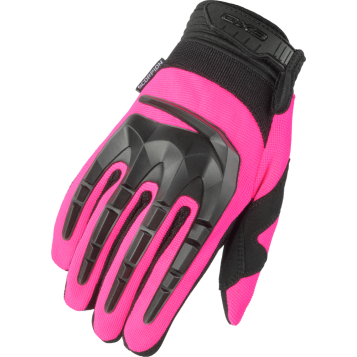


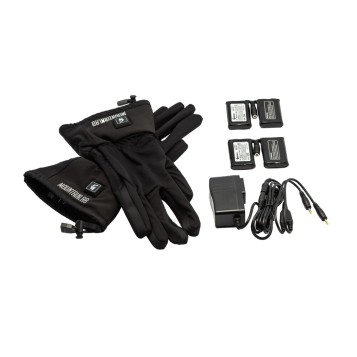



Motorcycle gloves are riding gear built to protect the hands in a crash while still letting you feel the clutch, throttle and brake levers. Leather and reinforced textile construction carries abrasion resistance, and CE armor over the knuckles and palm adds impact protection. Gloves split by weather and climate too: waterproof builds keep hands dry, heated gloves fight cold fingers once cold rides start, and neither replaces the armor underneath.
 Open filter
Riding conditions decide the glove subtype, not the color or the price tag. A cold morning start-up calls for insulation and wind-blocking, while a rainy interstate commute calls for a waterproof breathable membrane that keeps rain out without trapping sweat. A weekend trail ride or a first track day asks more of abrasion resistance and knuckle protection than of warmth.
Gauntlet cuffs cover the wrist gap under a jacket sleeve, where a short cuff glove tucks inside the sleeve instead for a trimmer fit. Leather builds in goatskin, deerskin or full-grain cowhide hold up well in a slide and break in to the hand over time, while textile builds in 600D or Cordura with a softshell panel breathe better and dry faster after a wet ride.
Daily commuters checking a phone at a stoplight want touchscreen-compatible fingertips and pre-curved fingers that cut hand fatigue on a long ride. CE armor pocket inserts and TPU hard knuckle protectors turn up across leather, textile, heated and waterproof builds alike, so picking for the weather doesn't mean giving up impact protection. A rider staring down a genuinely wet commute usually does best starting with waterproof motorcycle gloves and narrowing from there.
[products_2]
A gauntlet glove cinches down with a wrist strap to seal out wind and rain right at the wrist.
Bike-wired heated gloves pull power straight from the bike's electrical system through a wiring harness and a plug, and that connection generally delivers stronger, steadier heat than a battery pack manages on its own. The tradeoff is plugging and unplugging every time you get on and off the bike, which plenty of riders call a hassle next to a battery pack you just charge and go.
Battery-powered heated gloves skip the wiring harness entirely, but they run on a fixed charge, so burn time at full tilt is limited. Running the highest heat setting drains that charge fastest, so a long cold ride can outlast the battery before it outlasts the rider. Battery packs also lose capacity after a couple of seasons of charging cycles, the same way any rechargeable battery does, and a pack that won't hold a charge anymore usually means replacing it rather than fixing it.
Heating element panels and the battery pack pocket add bulk inside the glove, and that bulk can change how the throttle feels, how far the brake and clutch levers reach, and how reliably touchscreen-compatible fingertips register a tap. Finger separation inside a heated glove can also limit how evenly heat reaches each finger, worth checking closely for anyone whose cold hands come with circulation trouble.
A heated glove is one piece of a cold-weather system, not the whole fix. Pairing it with a jacket built for cold riding, like something from our motorcycle jackets and vests lineup, keeps the heat you're generating from bleeding out at the wrists and collar.
Riders pushing into genuinely sub-zero commutes or a day of snowbiking ask more of a heated glove than a quick cold morning start does, and that's where battery runtime and bike-wired steadiness both get tested hardest. Taking a short off-bike break to warm up hands, or carrying a backup layer for the ride home, is common practice among riders who push heated gear into that kind of extreme cold rather than relying on the glove alone.
[products_1]
CE EN 13594 is the standard built specifically for motorcycle gloves, covering construction and seam strength beyond what a general winter glove is tested for. EN 1621-1 impact levels, Level 1 and Level 2, test how much force a knuckle or palm pad absorbs on impact, not how safe the whole glove is overall.
A TPU hard knuckle protector or a CE armor pocket insert adds impact protection right at the knuckle, while a reinforced palm patch adds abrasion resistance where a hand usually hits pavement first in a slide. Aramid panels, the Kevlar-type fiber, and goatskin or deerskin leather add that abrasion resistance in different ways, and neither one removes the risk of injury, only reduces it.
Gloves built for general cold-weather or work use, the kind sold at a hardware store, aren't built or tested the same way as a motorcycle-specific glove, even when the heating element looks similar. The armor and certification language for a specific pair is usually listed in the product details, worth a close read before assuming it from the category alone. Riders who want that abrasion resistance without the bulk of armor plating tend to land on leather gloves built around a simple goatskin or deerskin construction.
[products_3]
Matching a feature to a riding condition beats guessing from a photo, and the comparison below lines up what each recurring property across this category actually solves and when it earns its keep.
| Feature or property | What it does | When it matters |
|---|---|---|
| TPU hard knuckle protector / CE armor pocket insert | Absorbs knuckle impact in a fall | Any style, especially street and track riding |
| Heating element panels + battery pack pocket | Generates warmth against cold fingers | Winter commutes and cold morning starts; adds bulk at the fingers |
| Mesh venting panels / perforation | Lets heat and sweat escape | Summer riding and stop-and-go traffic |
| Gauntlet cuff vs short cuff | Gauntlet seals the wrist gap under a sleeve; short cuff trims bulk inside it | Cold wind at the wrist vs quick on and off layering |
| Youth sizing | Fits a smaller hand and wrist | Younger or smaller riders; where a listing offers it, not all do |
| Weight (light mesh to heavier insulated or armored builds) | Trades warmth and protection for breathability | Matching the glove to the season you're riding in |
Hand circumference is the usual starting measurement on a glove size chart, and from there a rider finds where their hand falls on that model's size run. Size runs differ between models, some stretch from X-Small to 2X-Large, others cover a narrower band, so checking the specific listing's size range matters more than assuming one brand's medium matches another's.
Heating element panels, a battery pack pocket, or CE armor inserts add bulk inside a glove that a plain leather or textile pair doesn't carry. That bulk can mean sizing up a notch so the fingers still reach the lever and the fit doesn't pinch at the knuckle. A glove that fits snug bare-handed can feel tight and cut off circulation once a liner or heating element goes in underneath.
A glove liner worn underneath a riding glove is generally meant to go under a glove sized a notch larger than normal, not a rider's usual size, so the liner doesn't squeeze circulation at the fingers. Women's-specific glove lines carry their own sizing and cut built around a woman's hand, separate from a men's line sized down, and that's where women's motorcycle gloves start rather than a smaller men's medium.
Riders who normally stack a liner under a plain glove for warmth are often surprised at how much slimmer a dedicated heated glove feels by comparison, since the heating element sits built into the lining instead of adding a second full layer of fabric inside the shell. That said, a heated glove still runs bulkier than a bare leather or textile glove with no liner at all, so the fit check against lever reach and knuckle room still applies either way.
You can get your gloves from CALIFORNIA HEAT, HIGHWAY 21, FLY RACING, and others, the makers our own crew actually straps on before a ride. We back that up with people who ride helping you dial in sizing and fit before you commit to a pair.
Not sure which pair fits your hands and your bike? Ask us before you order. We ride the same roads you do, and we would rather spend five minutes on your question than have you figure it out on the highway.
Heated motorcycle gloves typically hold up through a couple of full winters before the battery pack loses its charge capacity or the heating element in one glove quits before the other, a common complaint even on premium brands. How long a given pair lasts also depends on how often it's charged and how it's stored between rides. Checking the product details for warranty terms on a specific pair is worth doing before you buy.
Many motorcycle gloves list touchscreen-compatible fingertips in the product details, built with a conductive material on the thumb and index finger so a phone or GPS screen still registers a tap. Not every pair carries this feature, so checking the specific listing beats assuming it across the category.