Matching ATV Tire Tread to Mixed and Changing Terrain
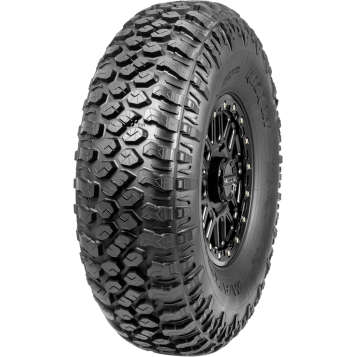
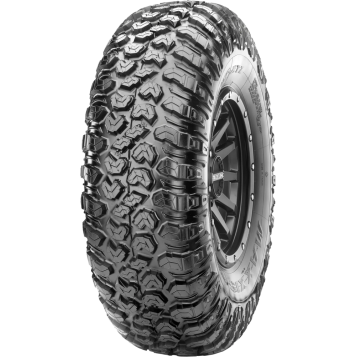
Mixed terrain forces a compromise, since no single tread handles hardpack, mud and loose dirt equally well. An aggressive lug pattern with deep mud lugs claws through sludge and clears itself as it rotates, but that same open spacing rolls loose and wears fast once you hit packed trail. A tighter, siped tread block grips hardpack with more contact area, then packs solid the first time it hits real mud.
Directional tread design matters here too. A tire built for forward bite digs in going straight through a rutted section, but gives up some sideways traction when the trail cuts across a slope. Riders heading out on hunting trips through mixed terrain, or anyone riding through wet spring conditions where the trail flips from dry clay to standing water in the same mile, feel this tradeoff the most.
A tire tuned hard for mud gives up grip on hardpack, and a hardpack-leaning tread bogs down once the ground turns soft.
[products_1]
ATV Tire Ply Rating and What the Number Trades Off
A ply rating tells you how much punishment the carcass resists, not how comfortable the ride will feel. The table below lines up the two common bands against what each one actually costs and solves, so you can weigh puncture resistance against ride quality instead of assuming higher is automatically better.
Ply rating bands and their real tradeoffs| Ply band | What it solves | What it costs |
|---|
| 6-ply rating | Good puncture resistance for general trail use | Lighter weight, softer ride, less load rating |
| 8-ply rating | Stronger resistance to rocks and sharp debris | More weight, stiffer sidewall, harsher ride on light machines |
| Reinforced sidewall | Extra protection against side punctures | Added weight regardless of ply count |
The construction behind that number is a multi-ply nylon casing, layers of fabric cord built into the carcass. More layers mean more reinforcement, but also more material flexing and absorbing less of the trail on its own. Load rating and load index are worth checking alongside ply, since two tires with the same ply count can carry different weights depending on casing design. On a lightweight sport quad, an 8-ply tire can bring more puncture resistance than the machine needs, trading a smoother ride for protection you may never use.
Radial vs Bias-Ply ATV Tires by Riding Scenario
Radial construction suits faster trail riding and long stretches of hardpack, where the sidewall flexes independently from the tread and keeps more rubber in contact with the ground, giving smoother ride quality and more even tread wear over time.
Bias-ply construction earns its keep hauling loads, working through deep ruts, or any utility job where the sidewall needs to stay stiff. That stiffness resists side punctures better and cuts down on body roll when a quad is loaded down, which matters more than ride comfort in that kind of work.
If your riding leans toward higher-speed trail use or UTV-adjacent work, check the speed rating in the product details, since it is one of the few specs that tells you how a given tire was actually engineered to perform.
[products_2]
ATV Tire Size, Rim Width and Pressure Limits by Machine Class
Tire size on an ATV reads as height by width, rim diameter, like 25x8-12: 25 inches tall, 8 inches wide, mounted on a 12 inch rim. That notation tells you fitment, but it does not tell you what happens when you push past what your machine class was built around.
Going bigger changes more than ground clearance. A taller tire changes the effective gearing, which throws off your speedometer reading and adds load the engine and CVT were not tuned for. On a machine with a continuously variable transmission, that extra strain shows up as belt wear and heat over time, not just a number on the dash.
Rim width limits differ by machine class for a real reason: a sport quad, a utility quad and a UTV-adjacent machine all clear tie rods, shocks and fender plastics differently. A width that clears fine on one machine can rub on another even at the same nominal tire size. This matters most after lift kit upgrades or when replacing worn tread with something larger than stock, since both situations push a rider to size up without rechecking the rest of the machine.
Inflated pressure has its own failure modes at either extreme. Run it too low on rocky or rim-pinch terrain and the bead can unseat from the rim, costing you the tire's seal entirely. Run it too high and the tread wears unevenly while the ride gets harsher than the tire was designed to feel. Before ordering anything wider or taller than stock, confirm tire load rating, bolt pattern and offset in the listing.
A tire that rubs or runs at the wrong pressure wears unevenly and gets replaced sooner than it should, and a carcass pushed past what your rim and suspension were built around can strain warranty coverage on the wheel or the tire itself if something fails from misuse rather than a defect.
[products_3]
Buying ATV Tires at Partiron
You can get your ATV tires from ITP, BFGoodrich, Maxxis, and others, the names our own crew trusts on their own machines. We back that up with people who actually ride helping you sort sizing and fit before you ever place an order.
- Riders answer. Sizing, fit, and what suits your machine, from people who ride.
- Trusted names only. Gear we would run ourselves, no no-name imports.
- Help up front. We sort fit before the order, not a return after it.
- Honest stock. A sold out size shows before you buy, not after.
- Free shipping. Orders over $99 ship free across the US with tracking.
Not sure which tire suits your riding? Ask us before you order.
For the rest of what a atv utv needs, start there.
ATV Tire Questions Riders Ask Before Ordering
What if my ATV's tire size sticker is worn off or missing?
Check the sidewall of your current tire first, since the size is molded right into the rubber. If that is worn smooth too, the machine's owner's manual lists the stock size, and our team can also help confirm it if you give us the make, model and year.
Do ATV tires need an inner tube, or are they tubeless?
Most current ATV tires use tubeless construction, sealing directly against the rim without a separate tube. The product details will say tube type for each listing, so confirm that before ordering if your wheel setup specifically needs one or the other.
Can I run a different construction, like radial up front and bias-ply in back?
Mixing construction front to rear is common on utility and work machines, since the front and rear tires carry different jobs. It works best when both tires are sized correctly for the drive system they are paired with, so check that fitment before mixing.
Does a higher ply rating mean the tire will last longer overall?
Not by itself. Ply rating mainly affects puncture resistance and load capacity, while actual tread life depends more on the rubber compound and how the tire is used. A high-ply tire run at the wrong pressure can still wear out faster than a lower-ply tire run correctly.