 Open filter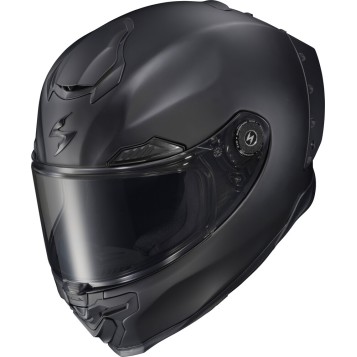
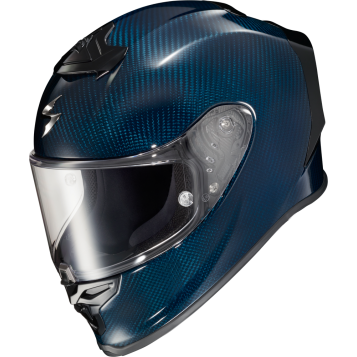
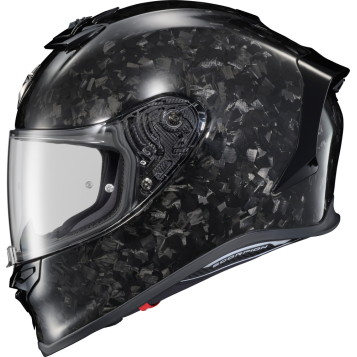
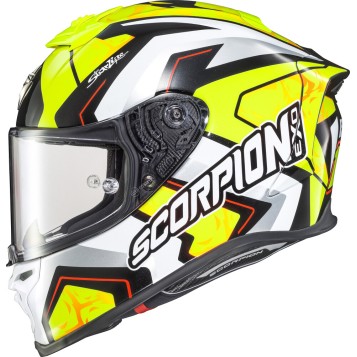
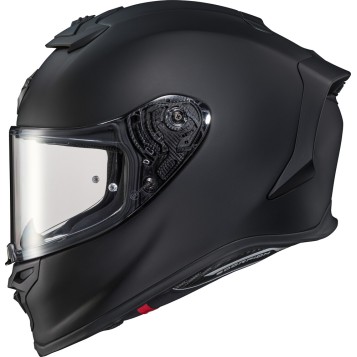
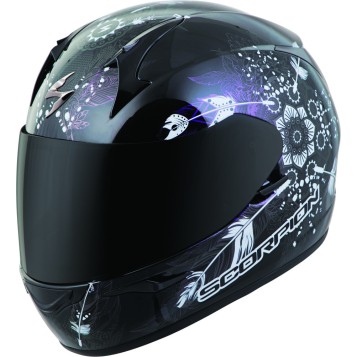
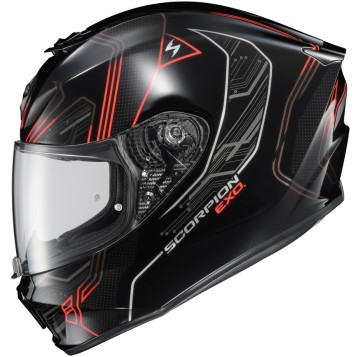
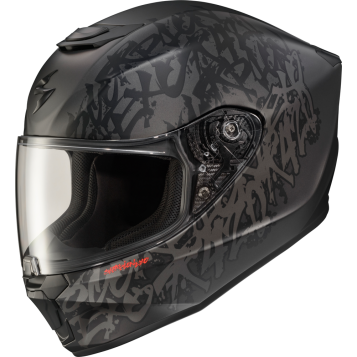
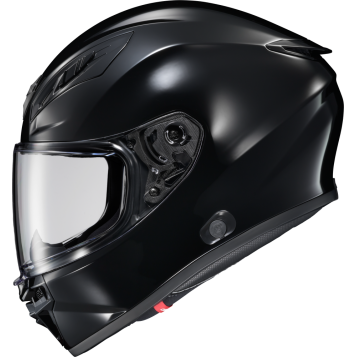
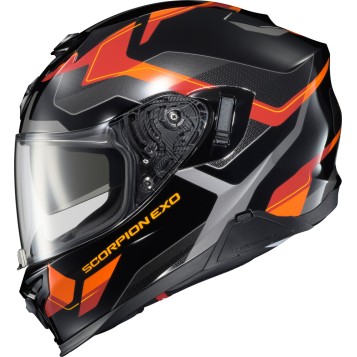
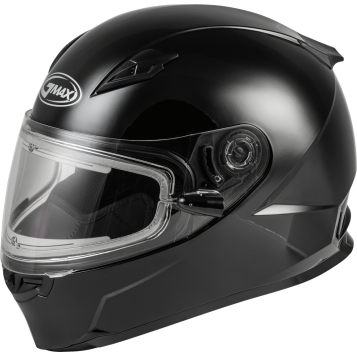
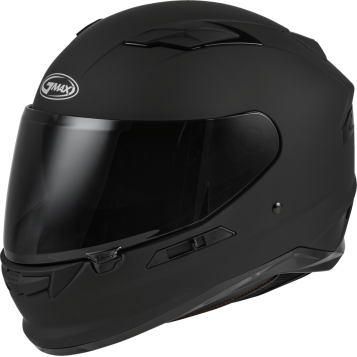
Showing 1 to 19 of 19 (1 Pages)
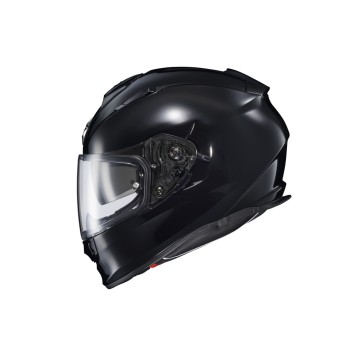
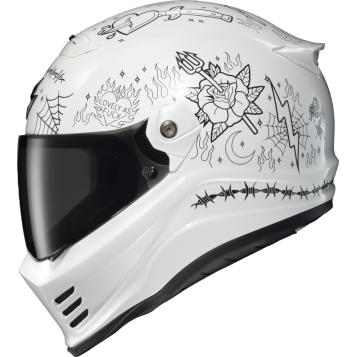
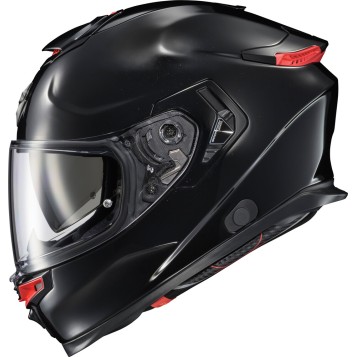
A full-face motorcycle helmet is the only helmet type that covers the chin and jaw with a fixed chin bar, closing the gap that half helmets and three-quarter helmets leave exposed. Every helmet here meets at least DOT FMVSS No. 218 certification, the federal standard required for street use in the United States.
 Open filter
Three certification logos appear on full-face motorcycle helmets sold in the US, and each represents a different testing method, a different certifier, and a different use case.
| Standard | Who certifies it | What it tests | Best fit for |
|---|---|---|---|
| DOT FMVSS No. 218 | Manufacturer self-certifies; NHTSA spot-checks | Impact attenuation, penetration resistance, retention system at defined drop heights | Legal US street minimum; required on every helmet sold for road use |
| ECE 22.06 | Independent third-party lab | Wider impact point range than DOT, including chin bar; updated from the previous 22.05 revision | Street and touring riders who want independent lab verification beyond self-certification |
| Snell M2020 | Independent Snell Memorial Foundation | Higher impact velocities than DOT; voluntary standard with stricter pass criteria | Track days and performance riding where higher-speed impacts are a realistic scenario |
DOT FMVSS No. 218 does not include a dedicated chin-bar impact test. ECE 22.06 does, which is one concrete reason dual-certified helmets carry independent value beyond the domestic legal minimum. The test matrix itself covers a part of the helmet that DOT does not formally evaluate.
The chin bar is what separates a full-face helmet from every other type, and it matters because the chin and face area is involved in a significant share of motorcycle crash impacts, according to the COST 327 European Commission motorcycle helmet study. A full-face chin bar is a single rigid piece of shell material. A modular chin bar has a hinge joint and seams running through it, which reduce its rigidity compared to a continuous shell in the same impact scenario.
Noise is the other real difference. A full-face shell seals continuously around the neck roll and visor, which blocks wind turbulence more effectively at highway speeds. A modular has hinge gaps that let more noise in, which matters on long interstate miles. A modular's ability to crack open at low speeds is a genuine advantage for stop-and-go city riding in summer heat, where a full-face can feel stifling at a red light.
Half helmets leave the chin, jaw, and face entirely unprotected. For anyone riding on public roads at highway speeds, the chin-bar gap is not a trade-off most riders would make twice. If you want to compare modular options alongside full-face, the broader motorcycle helmets category covers both.
Shell material affects how a full-face motorcycle helmet manages weight, how it distributes impact energy before that energy reaches the liner, and how it holds up over years of use. Three materials appear across helmets in this category, and each one behaves differently.
An injection-molded polycarbonate shell is the most common material at entry and mid-range price points. Polycarbonate is heavier than composite or carbon, and it absorbs some impact energy through controlled deformation of the shell itself. It meets DOT and ECE 22.06 standards without issue, and for daily street and commute riding at legal speeds, it does the job it is designed to do.
A fiberglass composite shell, including multi-layer constructions like TCT-Ultra composite, is hand-laid or press-formed rather than injection-molded. The result is a stiffer shell that disperses impact energy across a larger surface area before it reaches the multi-density EPS impact liner inside. Composite shells are lighter than polycarbonate and are common in the mid-to-upper price range.
A carbon fiber shell is the lightest option. The weight spread across helmets in this category runs from roughly 4.1 lb to 5.8 lb, which is a real difference you feel in your neck after four hours in the saddle. The EPS liner does the actual energy absorption work in any crash, regardless of shell material. A certified polycarbonate helmet meets the safety floor set by DOT or ECE 22.06; carbon saves weight and may reduce buffet at speed, but it is not a substitute for correct certification or correct fit.
Fit is the prerequisite for every safety feature in a full-face motorcycle helmet to work.
Start with head circumference in centimeters, measured at the widest point of your head, roughly one finger-width above your eyebrows. That number gets you into the right size range, but it does not finish the job. Shell shape matters just as much. Most riders have an intermediate oval head shape, slightly longer front-to-back than side-to-side. A long oval head is narrower side-to-side, and a round oval is more circular. Brands vary in their default shell shape, so the same circumference can feel correct in one brand and produce temple pressure in another. Where a product listing mentions fit shape, it is worth reading before ordering.
Cheek pads compress with heat and wear over roughly 15 to 20 hours of riding. Pads that feel like chipmunk cheeks on day one are usually the correct size. Sizing up because the pads feel tight is the most common return-causing mistake. Pads that feel comfortable on day one will likely be loose after break-in.
Before you pull the tags, run through these steps at home:
If the helmet includes a MIPS liner, a loose fit means the slip-plane layer cannot rotate correctly in an impact. MIPS only functions when the helmet stays in contact with your head under load, so fit is the prerequisite for that system to do anything useful.
A shell shape mismatch, temple or forehead pressure that won't ease after 30 minutes, means try a different brand's oval profile, not a different size.
Fogging, heat buildup, and highway wind noise each have a specific mechanical cause in a full-face motorcycle helmet, and each one has a specific fix. Knowing which feature to look for in a product listing is more useful than hoping the problem does not appear.
Fogging starts with warm exhaled air rising from your mouth toward the visor. A breath deflector or chin curtain redirects that air downward before it reaches the shield. A chin vent then pulls cooler outside air across the inside of the visor, keeping the surface temperature high enough to prevent condensation. A Pinlock insert creates a double-pane barrier that further resists fogging from outside temperature differences. The problem is that a Pinlock insert alone does not stop fogging if the chin vent is closed or absent, because warm air still pools inside the helmet and condenses against the shield. When you read a product listing, check for three things: a breath deflector or chin curtain included in the box, an adjustable chin vent, and a Pinlock-ready shield or an included Pinlock insert.
Heat in stop-and-go traffic is a different problem. Top intake vents and rear exhaust vents create a flow-through effect only when the bike is moving. At a red light, airflow stops and heat builds regardless of how many vents the helmet has. Helmets with an adjustable dual-position mouth vent manage this better than those with a single fixed intake, because you can open the mouth vent wider at low speeds without affecting the seal.
Wind noise at highway speeds comes from turbulence at the visor seal, around the chin bar, and at the neck roll. An aerodynamic shell geometry that reduces lift and buffet helps here. Speaker pockets cut into the cheek pad foam for a Bluetooth intercom do not affect the seal when they are factory-designed into the liner.
Most manufacturers recommend replacing a full-face helmet five years from the date of first use, or seven years from the date of manufacture, whichever comes first. Those timelines assume no impacts. Replace a helmet immediately after any crash, even one that looks minor, because EPS foam compresses permanently on impact and does not recover. Other replacement triggers include a cracked or delaminating shell, a visor that no longer seals cleanly, a liner that no longer holds its shape, or a chin strap retention system that feels loose.
Run the rotation test again after 15 to 20 hours of riding: put the helmet on, fasten the chin strap, and try to rotate it side to side. If it moves more than a small amount, the fit has opened up past the correct range. A second check is the roll-off test: push the helmet forward from the back with the strap fastened; it should not shift toward your eyes. If either test shows movement that was not there when you bought the helmet, the cheek pads have compressed beyond the break-in range and the helmet is too loose to function correctly.
Most Bluetooth intercom systems from brands like Sena and Cardo can be mounted on any full-face helmet using the clamp that ships with the unit, but audio quality and comfort are noticeably better when the helmet has factory-cut speaker pockets in the cheek pad foam. Speaker pockets hold the speakers flush against your ears without creating a pressure point, and they keep the speakers positioned correctly so you do not lose audio at highway speeds. The product listing will say so where pockets are present. If you already own an intercom unit and want to check compatibility, the audio and communication gear section lists intercom systems and their mounting hardware.