What Leather Actually Holds Up on a Slide
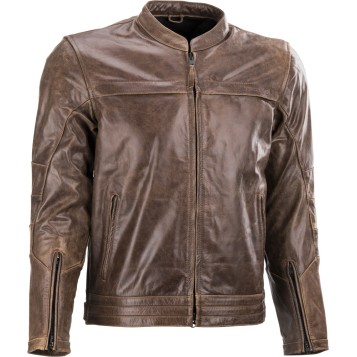
Full-grain cowhide leather is the hide riders reach for first, since its tight outer grain stays intact the longest in a slide and resists road rash better than a thinner cut. Top-grain leather sands that outer layer down a touch for a softer feel, trading some slide toughness for comfort.
Goatskin leather runs lighter and more supple, which suits a jacket worn more for style than for serious mileage, while buffalo leather runs thicker and coarser and holds up to real abuse. Aniline leather is dyed through rather than coated, so the grain shows more, and a waxed leather finish adds some water resistance along with the worn-in look riders chase.
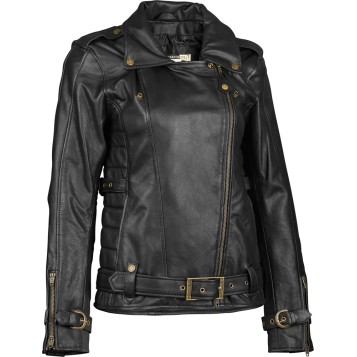
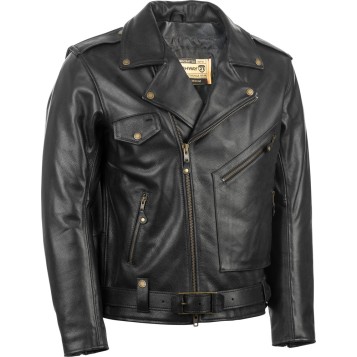
Weight, in ounces or millimeters of thickness, tells you more about toughness than the word leather ever will. A black leather motorcycle jacket in a heavier hide will outlast a thinner one in the same color, and any hide ages into a leather patina that most riders end up preferring over that stiff, store-fresh look.
Compare hide and weight across the full motorcycle jackets and vests lineup before you settle on a cut.
CE Armor and Back Protection in a Leather Jacket
CE armor pockets separate an armored leather jacket from a fashion leather jacket that only looks the part. Shoulder armor and elbow armor sit in dedicated pockets sewn into the sleeve and shoulder panels, so a hard landing spreads impact across foam or plastic instead of straight into the joint and skin. A back protector pocket is a separate, usually flatter space built to hold a back protector rather than the smaller shoulder or elbow pieces.
Removable CE armor lets you pull the inserts for washing the liner or swap in a thicker piece later, and checking for that removable feature is worth doing before you buy. The same CE logic applies to motorcycle gloves, worth checking if you want matching protection at the hands too.
A handful of standards separate real armor from a fashion cut, and lining up what each one tests makes the listings easier to compare:
What leather jacket armor terms test and what to check in the listing
| Term |
What it covers |
What to check in the listing |
| CE armor pockets |
Dedicated panels in the shoulder, elbow and back built to hold inserts |
If the pocket ships with armor already in it or sits empty |
| EN 1621-1 impact protection Level 1 |
Impact absorption at the shoulder and elbow |
If the listing names Level 1 specifically, since the level varies by jacket |
| EN 1621-2 back protector Level 1 and Level 2 |
Spine impact absorption, Level 2 absorbs more than Level 1 |
If a back protector ships with the jacket or just the pocket for one |
| Armor insert placement (shoulders, elbows, back) |
Where impact is most likely in a fall |
If all three positions are covered or only two |
Armor insert placement matters as much as the standard itself, since a jacket that only covers shoulders and elbows still leaves the spine exposed unless the back protector pocket is filled too. Jackets built with CE Level 1 removable armor at the shoulder and elbow give you that base coverage from the start, with room to add a back protector later.
[products_1]
Sizing a Leather Motorcycle Jacket Correctly
A jacket sizing chart built around chest measurement, sleeve length and jacket length matters more for leather than for textile, since leather does not give like a stretchy mesh jacket will. Race fit runs snug through the body and short through the torso, built to keep armor locked against the shoulder and elbow in a tuck, while a relaxed fit leaves room for a sweater underneath and sits looser everywhere. Slim fit sits between the two, close enough to keep armor in place without feeling like a second skin.
Shoulder fit decides more than the chest measurement does, because loose shoulders let the armor pocket shift forward or back every time you move your arms. A new leather jacket arrives stiff, and that break-in period of a few rides is normal before the hide relaxes around your shoulders and elbows. It should still feel snug on day one, not loose, since leather gives a little but never as much as textile does.
Most listings are cut for a men's frame first, so a mens leather motorcycle jacket in a given size often runs long in the body and wide in the shoulder. A women's leather motorcycle jacket is cut with a narrower shoulder line and a shorter sleeve length to match that difference, and checking the womens motorcycle jackets lineup before sizing a men's cut down saves you a return.
[products_3]
Size up only for a heavy sweater underneath, not just for a base layer or a plain shirt.
Leather stretches a little at the shoulders, elbows, and underarms, the spots riders move the most.
Liner and Vent Choices for a Leather Jacket
A removable thermal liner turns one jacket into two, giving you a warmer shell for a cold morning commute on the highway and a lighter shell once the liner comes out for warmer afternoons. Quilted lining inside that liner is what actually holds the heat in, while a mesh liner on its own does less for warmth and more for keeping sweat off your back on a mild day.
Zippered vents cut panels into the chest, back or sleeves so air moves through on a hot weather ride needing airflow, something a sealed leather jacket cannot manage no matter how light the hide feels. A perforated leather jacket or a vented leather jacket takes that further, with small holes punched straight through the hide for even more airflow, at the cost of some wind block on a cold start.
A waterproof leather jacket, where the listing names a waterproof membrane or coating, is worth reaching for on a rainy interstate run home, since treated leather alone slows water more than it stops it. Going into fall riding season, a liner you can zip in and vents you can close cover more weather than either feature manages alone, and a jacket with neither is really a three-season piece at best.
Riders who want airflow without carrying leather's weight at all are usually better served by the mesh motorcycle jackets built for nothing but heat, while riders who want one jacket for most of the year should look for both the liner and the vents in the same listing.
Leather vs Textile for Abrasion Resistance
Leather vs textile comes down to what you are protecting against and how far you are riding. Leather wins on raw abrasion resistance, since a tight cowhide or buffalo hide slides and burns through slower than most woven textile shells, which is why a cafe racer jacket, a classic biker jacket or a perfecto style jacket built in leather still dominates short, hard street and canyon riding.
A cruiser leather jacket or a touring leather jacket also holds up better to sitting in direct sun and road grit over years of daily use than textile tends to, and it ages into a vintage leather jacket look that most textile pieces never reach. A sport leather jacket cut for a tucked riding position adds articulation that leather alone, without that specific cut, cannot match.
Textile pulls ahead on long days in changing weather, since options from the textile motorcycle jackets lineup usually pack a waterproof membrane and more vent options into less weight than leather carries. Riders doing mostly touring in mixed weather are often better off there than defaulting to leather out of habit.
[products_2]
Buying Leather Motorcycle Jackets at Partiron
Leather motorcycle jackets at Partiron come from Highway 21 and others, makers our own riders have worn on real miles. We help you sort fit and sizing before you order, so the jacket you get is the one you actually need.
- Riders on support. Sizing and fit advice from people who actually ride.
- Trusted makers only. Gear we would wear ourselves, no no-name imports.
- Honest sizing. A sold-out size shows before you buy, not after.
- Free shipping over $99. US orders past that mark ship at no cost.
Not sure which jacket fits your riding? Ask us before you order. We would rather spend five minutes on your question than have you figure it out on the highway.
Leather Jacket Questions Riders Still Ask
How often should I condition a leather motorcycle jacket?
A light coat of leather conditioner every few months keeps the hide from drying out, more often if you ride through heat or rain on a regular basis. Wipe off road grime first, then let the conditioner sit before you wear the jacket again, since a damp jacket worn too soon after conditioning wears faster.